Variant Calling Pipeline

Turn sequencing data into actionable variants

Gain a clear understanding of genetic variations hidden within your sequencing data through a streamlined, automated analysis workflow. Upload your raw FASTQ files and the platform handles alignment, variant calling, filtering, and annotation end-to-end. Identify SNPs, indels, structural variants, and copy number variants with high confidence through a fast, reliable analysis pipeline.

Variant Calling

Trusted by industry-leading institutes

mahidol
iisc
aiims
2-removebg-preview-1
3-removebg-preview-1
qatar univesity
Workflow

How It Works

Clean data. Zero compromises.

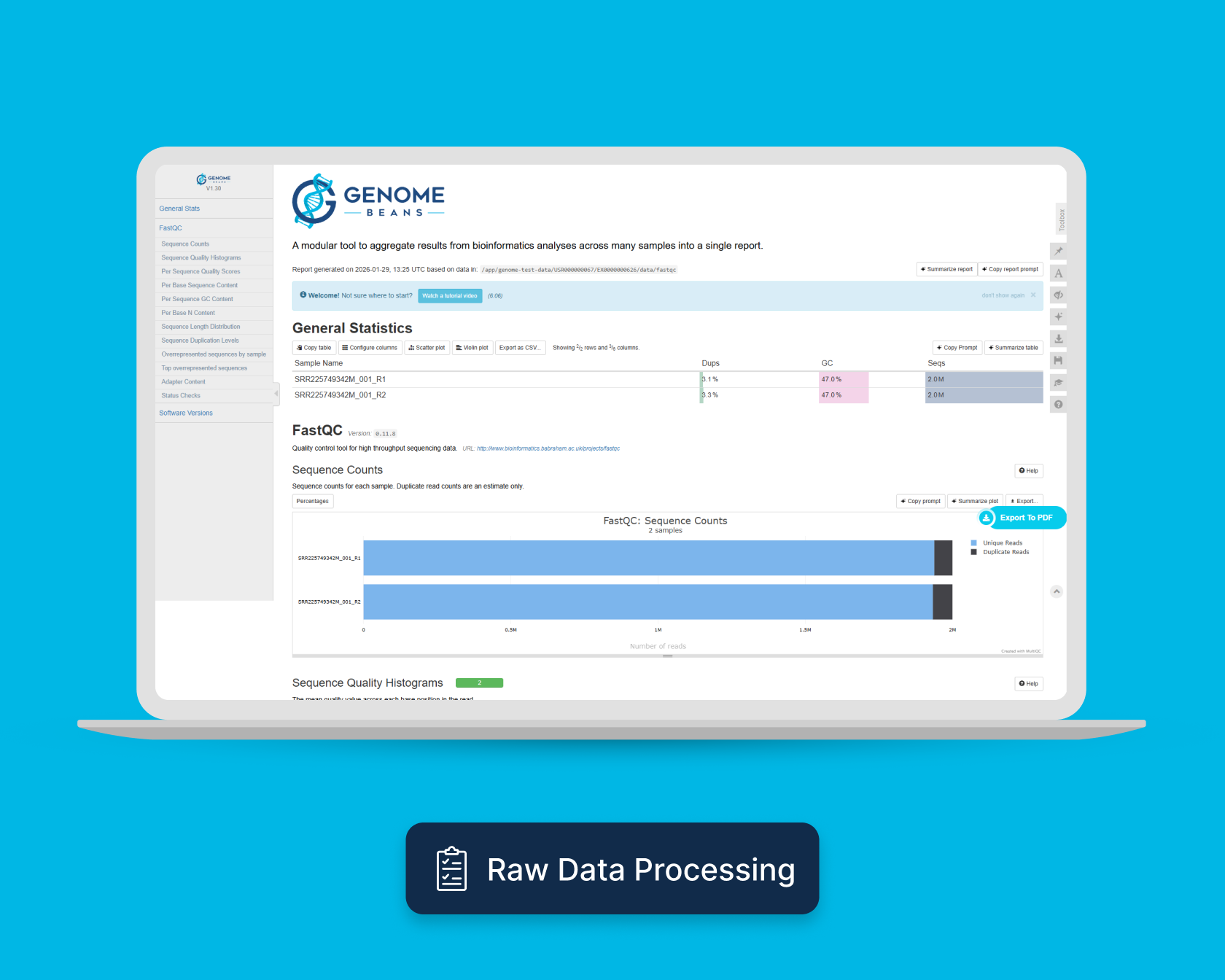
Raw FASTQ files run through QC, trimming, indexing and alignment automatically. Every read lands exactly where it belongs before a single variant is called. 

  • Automatically filters, trims, and cleans raw FASTQ files.

  • Maps sequence reads against reference genomes.

  • Converts raw sequence data into clean gene expression matrices.

VC-Pre Proccessing

Counts become biology here. 

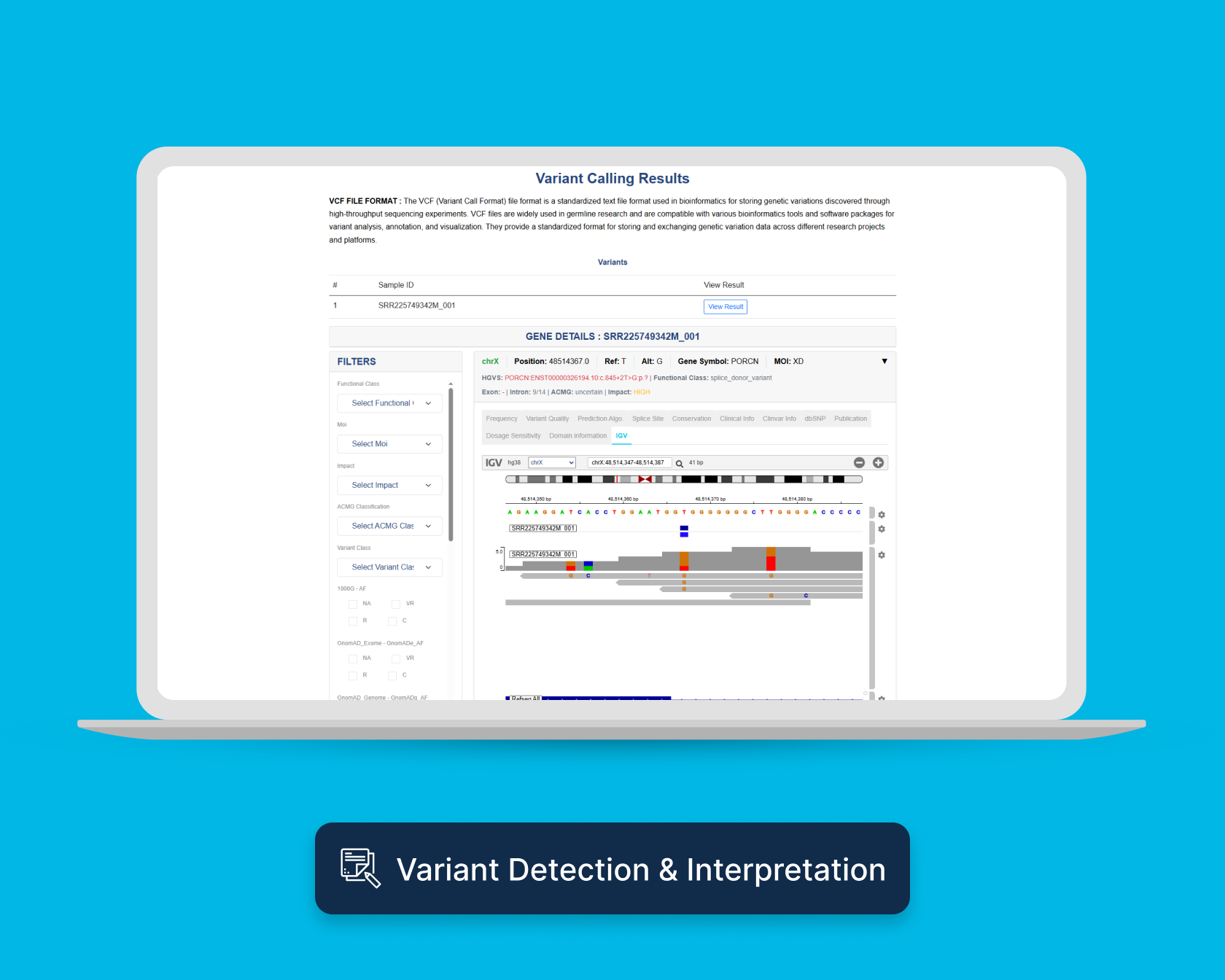
The aligned reads are analyzed at each genomic position to detect single nucleotide polymorphisms (SNPs), insertions, deletions, and structural variants. These identified variants are then filtered and annotated to distinguish true biological signals from sequencing errors, enabling downstream analysis of genetic variation.

  • Identifies statistically significant, differentially expressed genes.

  • Evaluates biological variance using PCA plots and heatmaps.

  • Maps genes to functional biological and KEGG pathways.

VC-Post Proccessing-1

See your data. Get the story.

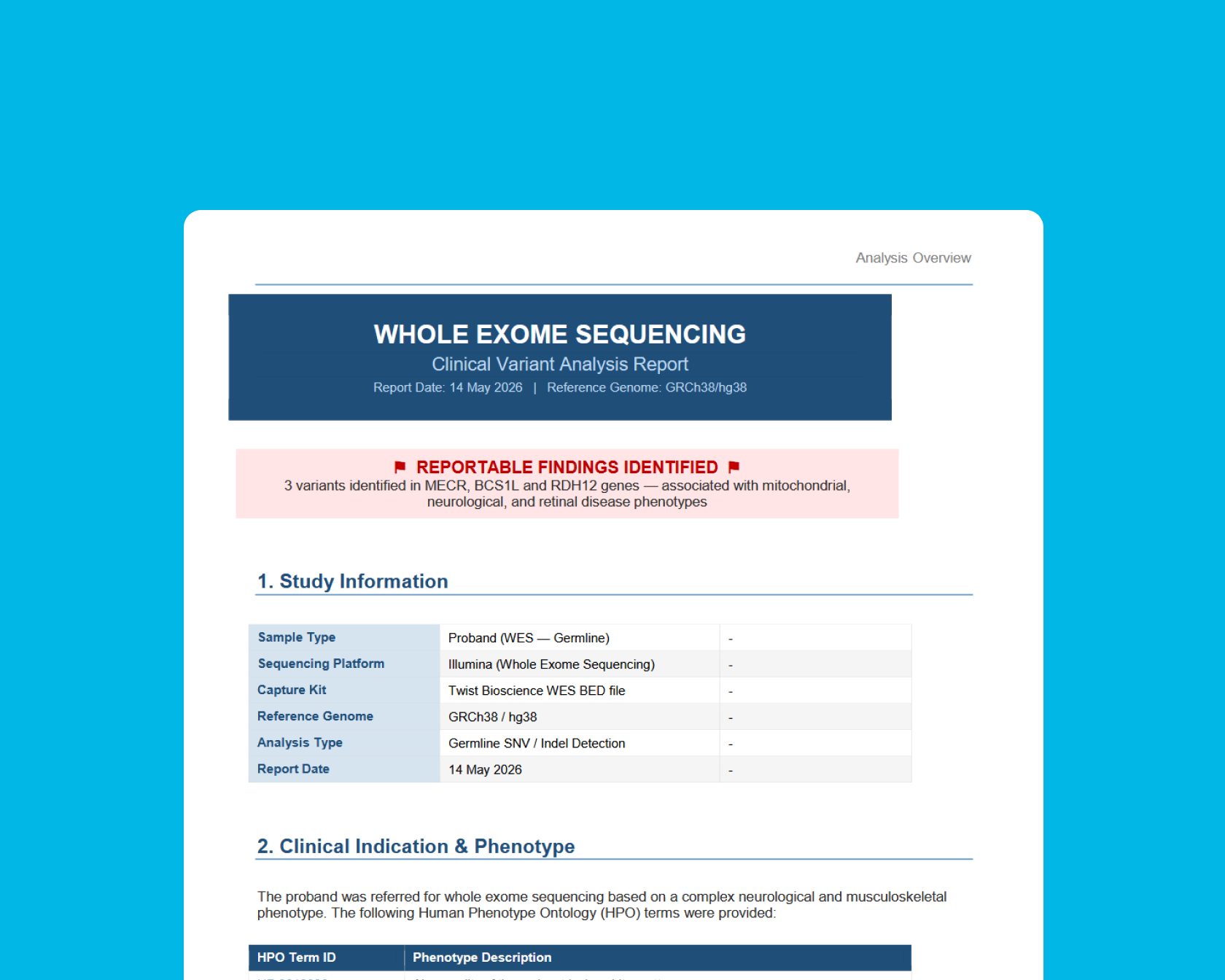
Two interactive HTML reports Pre-Processing and Post-Processing delivered directly to your dashboard. Visual, shareable, and presentation-ready from the moment they land.

    • Delivers clear visual reports for primary and downstream analysis.

    • Generates high-resolution, interactive figures for quick reviews.

    • Streams results to your dashboard as soon as the run finishes.

    •  
VC-Reports

Packaged. Publication-ready results!

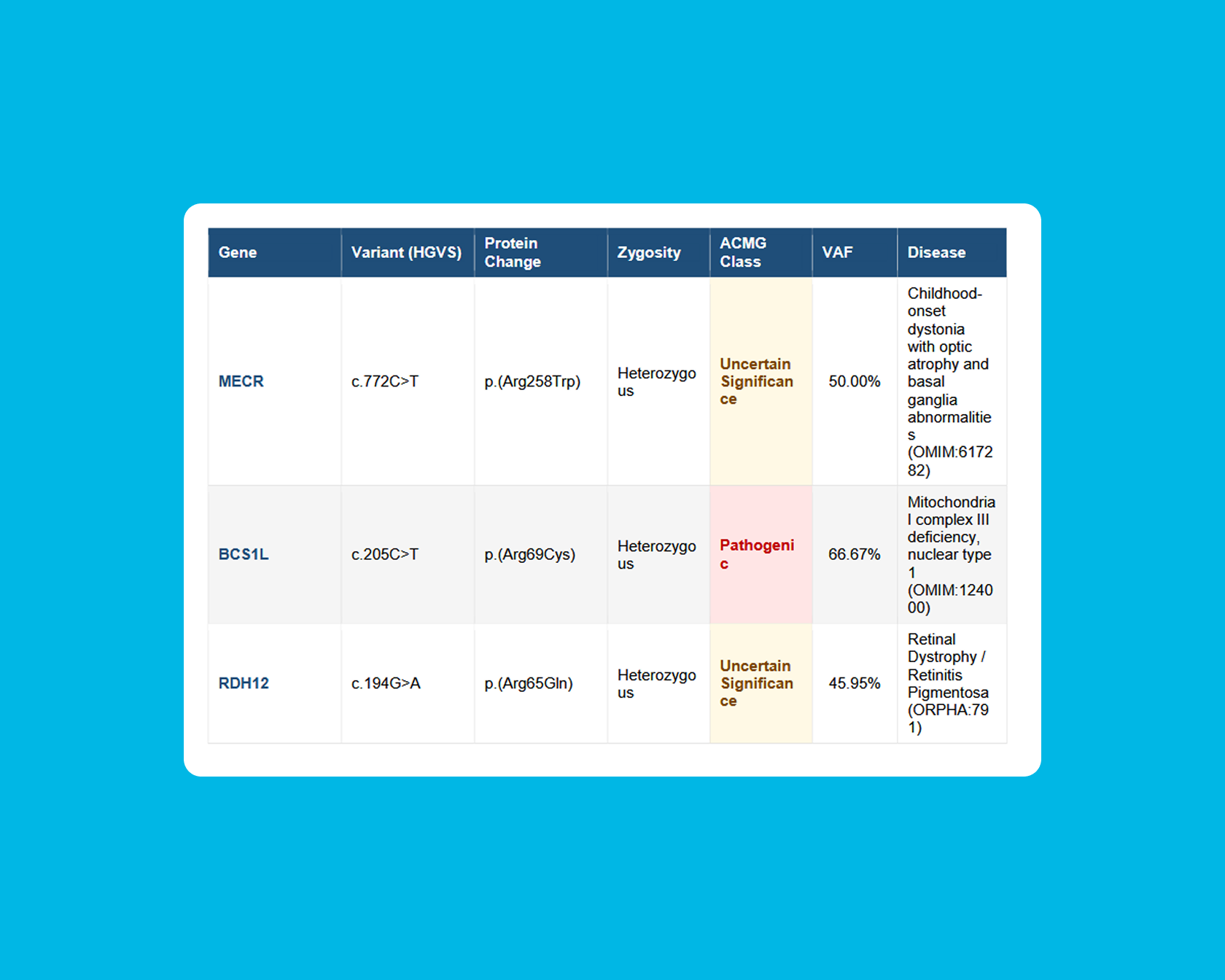
From raw files to final figures every deliverable you need to write your paper or present your findings is waiting in your dashboard the moment the run finishes.

  • Achieve unmatched accuracy by automating IC reconciliation.
  • Gain full transparency through real-time status monitoring.
  • Ensure seamless integration with secure, flexible solutions.
VC-Deliverables
Our Pipeline Modules

Even one missed mutation matters.

Inherited variants

Detect SNPs and indels against a reference genome with support for family trio analysis and inherited disease research.

Tumor mutations

Isolates what changed in the cancer cell. Somatic SNVs and structural variants flagged with clinical precision.

Variant annotation

Transform raw VCF files into meaningful biological insights using Funcotator, SNPeff, and gnomAD annotation pipelines.

10K+

Samples analyzed

99%

Pipeline accuracy

<24h

Turnaround time

200+

Research teams

Customer stories

Over 6,000 happy customers worldwide

View all

No case studies found. Select a blog source stream in the module editor panel.

Got Questions?

We figured you'd ask

Got Questions-4

What exactly is variant calling and why does it matter?

Variant calling finds the differences between a sequenced genome and a reference SNPs, insertions, deletions and structural changes. These are the genetic basis of inherited disease, cancer mutations and population diversity. Every downstream analysis starts here. Get this wrong and everything built on top of it is unreliable.

What is the difference between germline and somatic variant calling?

Germline variants are inherited present in every cell and passed to offspring. Somatic variants arise after conception, typically in tumor cells, found by comparing tumor and normal tissue from the same patient. The tools used for each are completely different. GenomeBeans handles both in the same automated pipeline.

Does GenomeBeans support both WGS and WES data?

Yes. Both whole genome sequencing and whole exome sequencing inputs are fully supported. Upload your raw FASTQ files and the platform automatically selects the right alignment and variant calling parameters. No manual configuration needed.

What databases are used to annotate variants?

Variants are annotated using multiple reference databases including dbNSFP, ClinVar, dbSNP, dbscSNV, gnomAD, and the 1000 Genomes Project. Together, these resources provide information on known variants, population allele frequencies, clinical significance, functional predictions, and splice-site impact. This comprehensive annotation framework helps prioritize potentially pathogenic variants and distinguish rare disease-associated variants from common benign polymorphisms.

What does the variant report actually include?

A fully annotated VCF file, hard-filtered SNP and indel tables, functional impact annotations, population frequency data and IGV visualizations all packed into one interactive HTML report you can open in any browser and share instantly.

Is my sequencing data safe and private?

100% private. You own everything you upload. It is never shared. Never sold. Results are securely archived for 90 days then permanently deleted from our servers. No exceptions. No fine print.

Get Started

Ready to turn your raw sequencing data
into publication-ready results?