Immunomics Analysis Pipeline

Gain a deeper understanding of your immune system

Explore immune repertoire dynamics with comprehensive TCR and BCR profiling. Analyze V(D)J recombination patterns, map clonotype diversity, and identify clonal expansion events across immune cell populations. Connect receptor sequences to antigen specificity, disease mechanisms, and treatment responses through clear, actionable immunomics insights.

Immunomics

Trusted by industry-leading institutes

mahidol
iisc
aiims
2-removebg-preview-1
3-removebg-preview-1
qatar univesity
Workflow

How It Works

Clean sample. Accurate results.

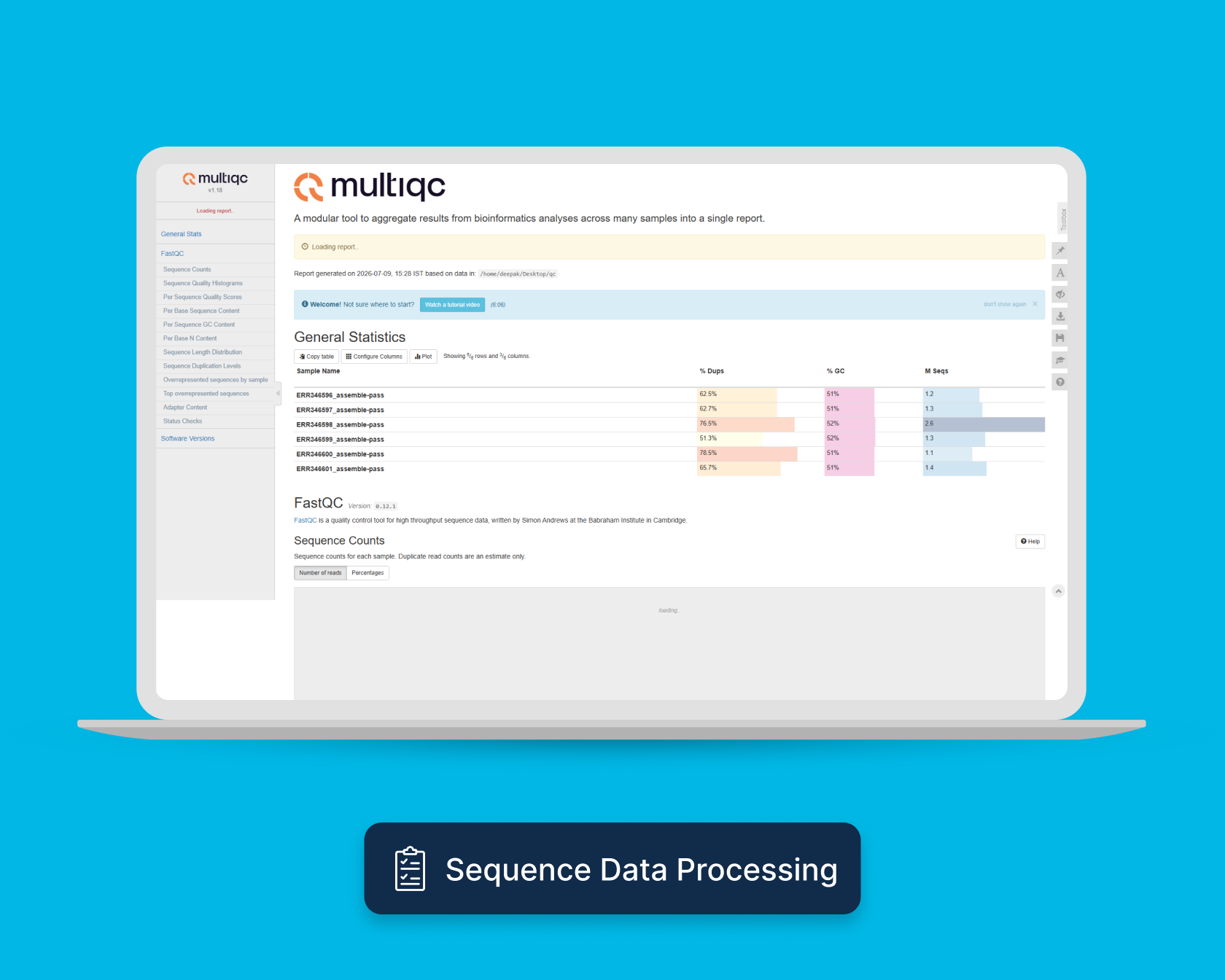
Raw immune sequencing data is processed through rigorous QC, adapter trimming and UMI-based deduplication. Every read is validated before V(D)J assignment begins because one bad read can corrupt an entire clonotype call.

  • Automatically filters, trims, and cleans raw FASTQ files.

  • Maps sequence reads against reference genomes.

  • Converts raw sequence data into clean gene expression matrices.

IM-Pre Proccessing

Your clusters. Auto-identified.

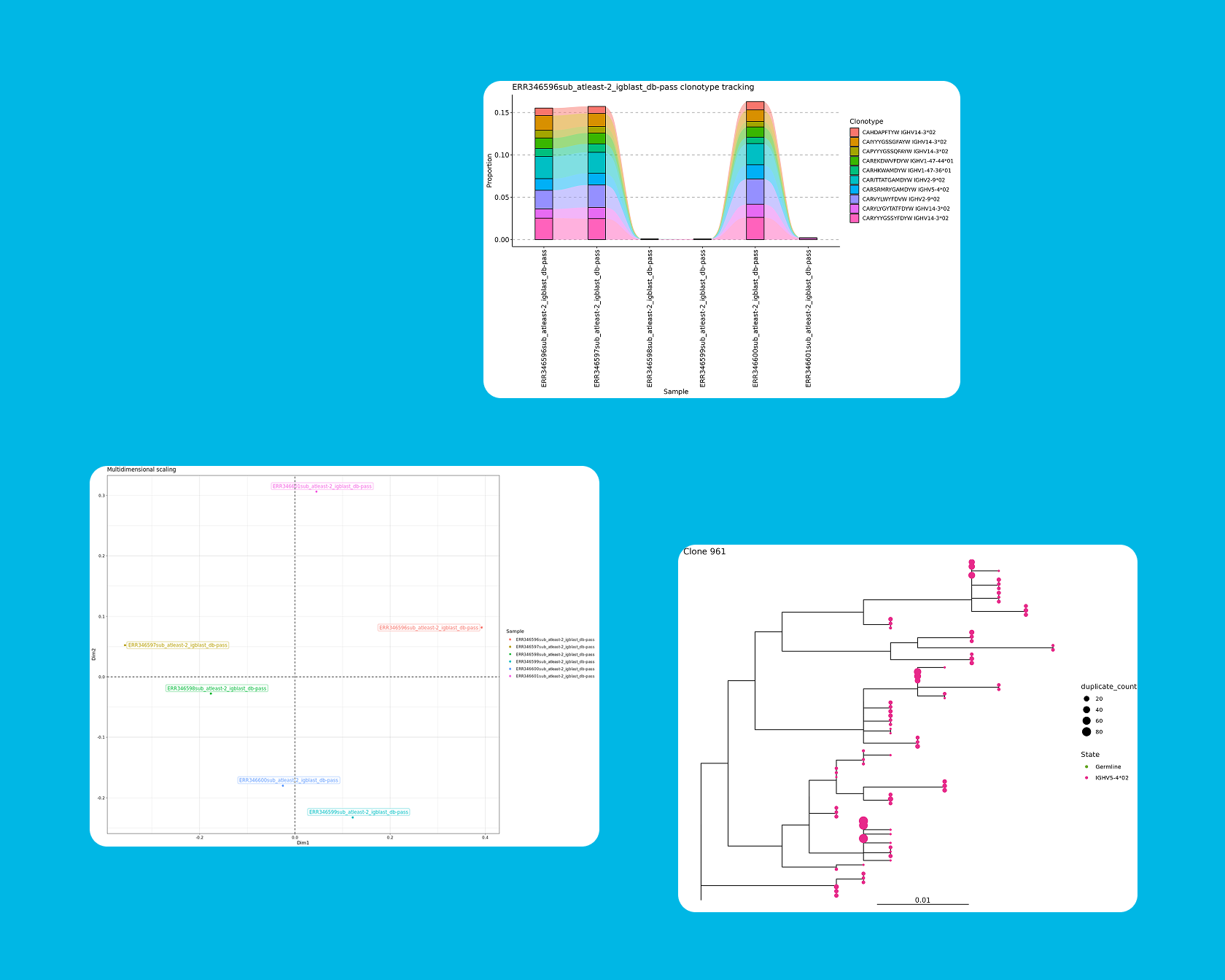
Clonotypes assembled from V(D)J assignments. Diversity indices calculated. Clonal expansion events flagged. CDR3 sequences extracted and linked to antigen specificity databases giving you the full functional landscape of your immune repertoire.

  • Identifies statistically significant, differentially expressed genes.

  • Evaluates biological variance using PCA plots and heatmaps.

  • Maps genes to functional biological and KEGG pathways.

IM-Post Proccessing

See your data. Get the story.

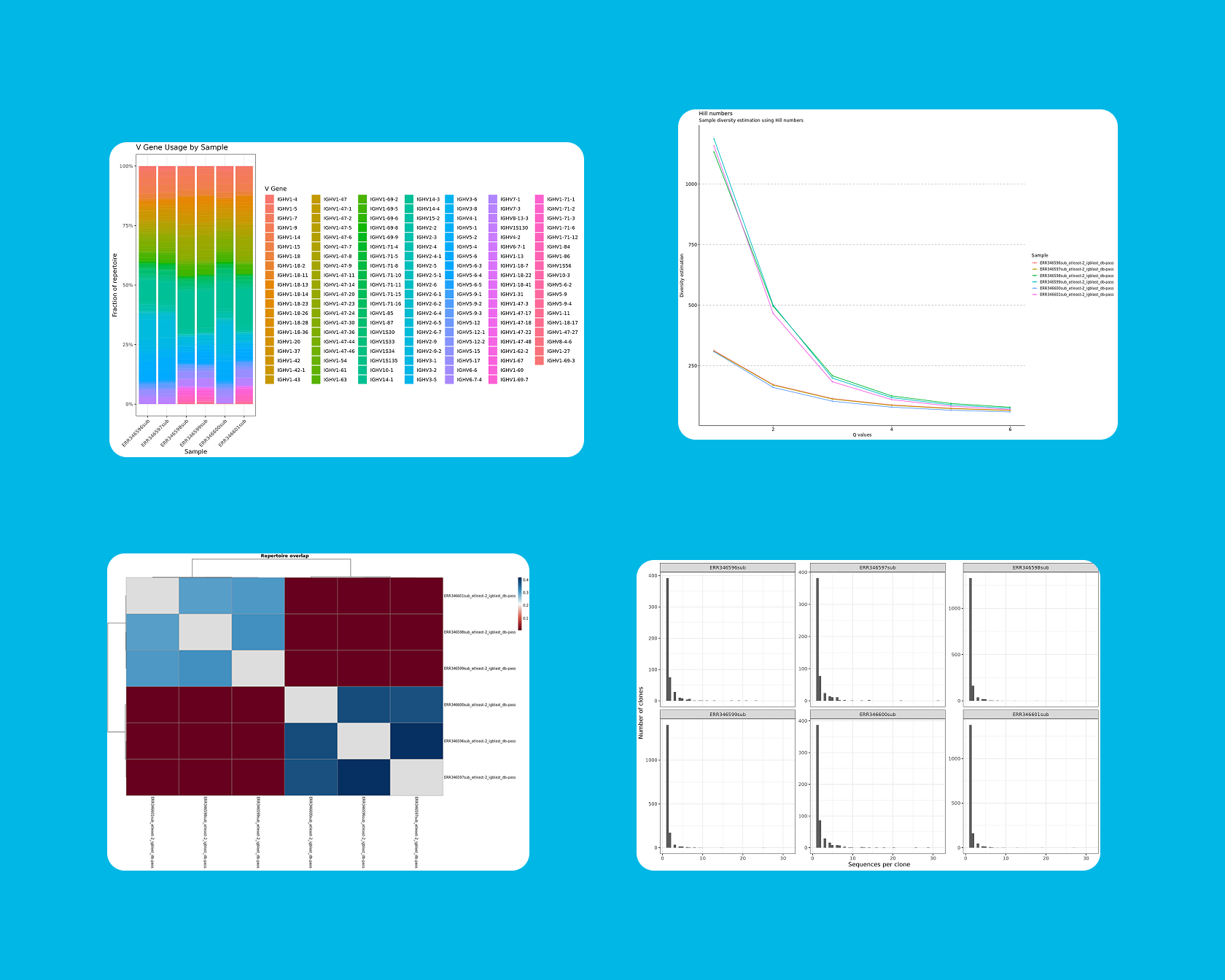
Clonotype tables, diversity plots, V gene usage charts and CDR3 length distributions all delivered as interactive HTML reports to your dashboard the moment the run finishes.

  • Delivers clear visual reports for primary and downstream analysis.

  • Generates high-resolution, interactive figures for quick reviews.

  • Streams results to your dashboard as soon as the run finishes.

IM-Deliverables

Ready to publish results.

From raw sequencing reads to fully annotated immune repertoire reports every deliverable you need to publish, present or hand off is in your dashboard the moment the pipeline completes.

  • Achieve unmatched accuracy by automating IC reconciliation.
  • Gain full transparency through real-time status monitoring.
  • Ensure seamless integration with secure, flexible solutions.
IM-Reports
Our Pipeline Modules

Three analyses. One run.

TCR profiling

Full TCRα and TCRβ V(D)J analysis. Clonotype assembly, diversity metrics and expansion events automated end to end.

BCR profiling

IGH, IGK and IGL chain analysis with somatic hypermutation detection and isotype distribution profiling.

HLA typing

High-resolution HLA typing from NGS data. Immune gene variants called for disease and transplant research.

10K+

Samples analyzed

99%

Pipeline accuracy

<24h

Turnaround time

200+

Research teams

Customer stories

Over 6,000 happy customers worldwide

View all

No case studies found. Select a blog source stream in the module editor panel.

Got Questions?

We figured you'd ask

Got Questions-2-1

What is immune repertoire sequencing?

Immune repertoire sequencing reads every unique T cell and B cell receptor in your sample mapping the full diversity of your immune response from a single NGS run. No culturing. No guessing. Just a complete picture of every clone your immune system has generated.

How long does an immunomics analysis take?

Most runs complete within a day depending on number of samples of submission. A standard TCR or BCR profiling run is typically done the same day. Your dashboard updates live so you always know where things stand no waiting around for a pipeline to silently finish.

What file format do I need to upload?

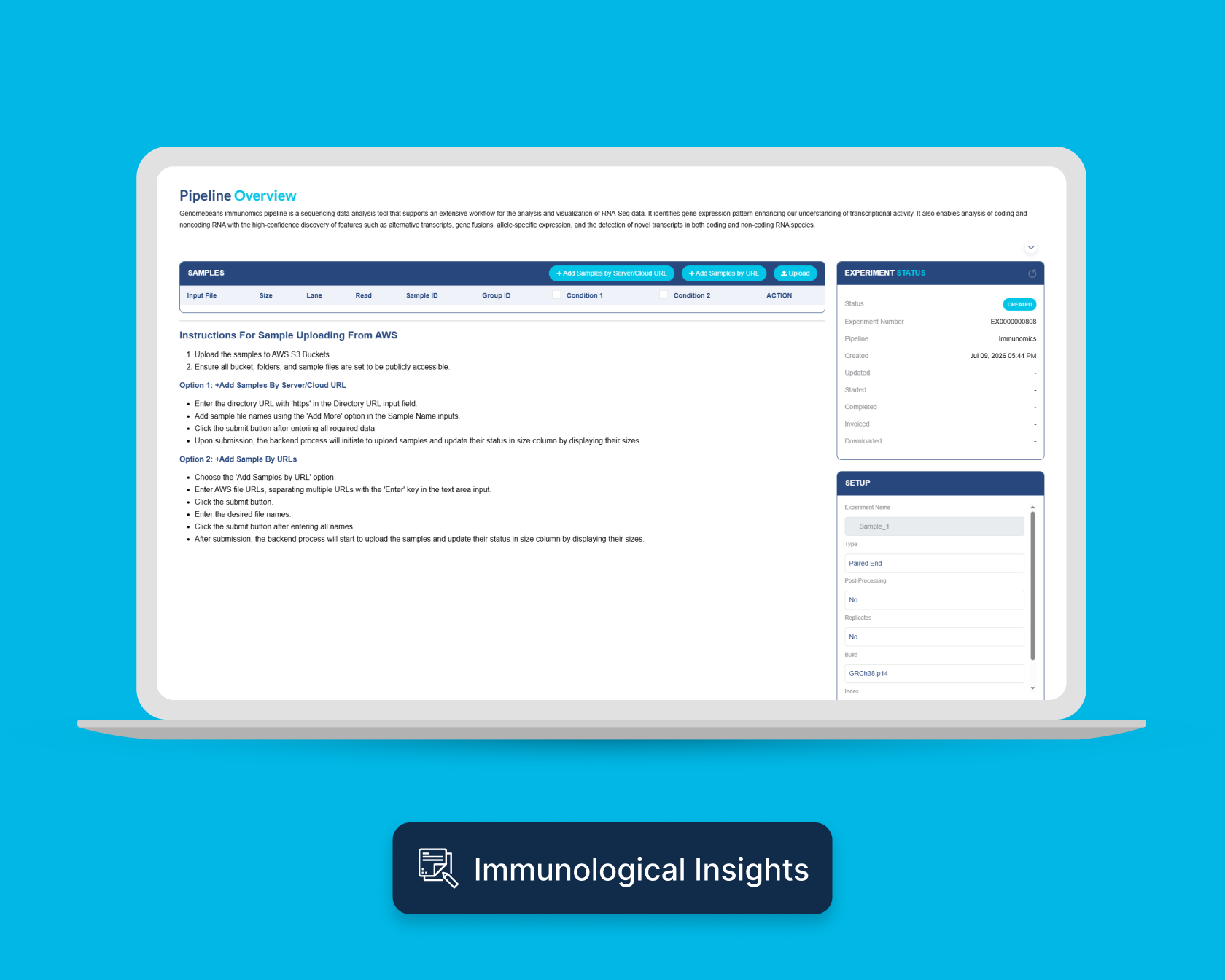
Raw FASTQ files exactly what your sequencing facility delivers. Paired-end and single-end reads are both supported. Upload once and the pipeline handles QC, alignment, clonotype assembly and reporting automatically.

What does the immunomics report actually include?

You get a clonotype frequency table with full V(D)J assignments and CDR3 sequences, a diversity and clonality dashboard with Shannon entropy and rarefaction curves, V gene usage charts. All delivered as shareable interactive HTML to your dashboard.

Can GenomeBeans detect clonal expansion and dominant clones?

Yes and this is one of the most clinically valuable outputs. The pipeline automatically flags expanded and hyperexpanded clones so you can immediately see which T or B cell populations are responding to a pathogen, tumour or vaccine. No manual filtering required.

Is my sequencing data safe and private?

100% private. You own everything you upload. Never shared. Never sold. Results archived for 90 days then permanently deleted. No exceptions. No fine print.

Coming Soon

Immunomics is coming soon. Be the first
to know when it goes live