Metagenomics Pipeline

Unlock insights from your microbiome data

Explore immune repertoire dynamics with comprehensive TCR and BCR profiling. Analyze V(D)J recombination patterns, map clonotype diversity, and identify clonal expansion events across immune cell populations. Connect receptor sequences to antigen specificity, disease mechanisms, and treatment responses through clear, actionable immunomics insights.

Metagenomics

Trusted by industry-leading institutes

mahidol
iisc
aiims
2-removebg-preview-1
3-removebg-preview-1
qatar univesity
Workflow
How It Works
Clean sample. Accurate results.

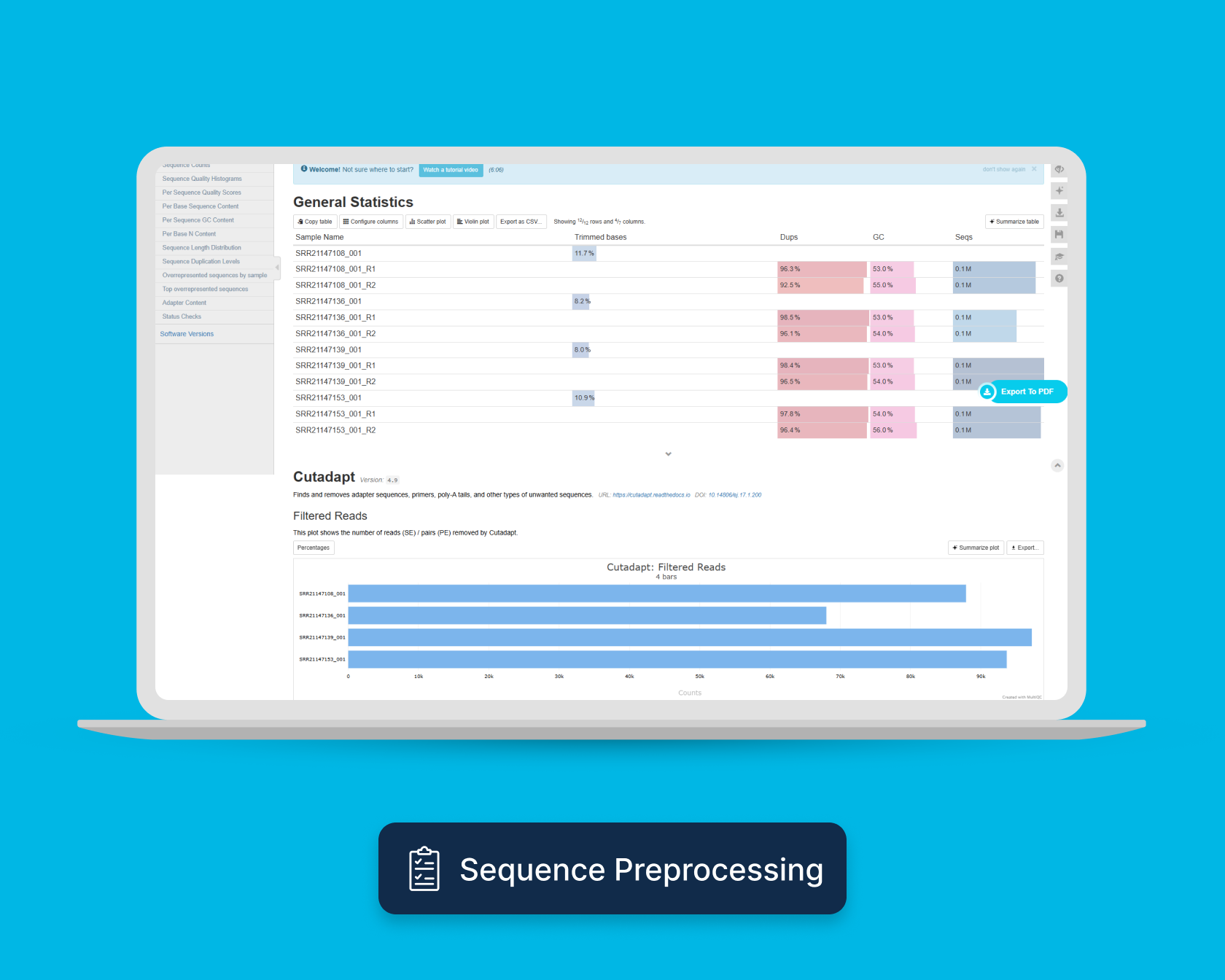
Metagenomic samples are naturally messy. Host DNA, adapter contamination and duplicate reads corrupt everything downstream. We strip it all out before a single microbe gets classified.

  • Automatically filters, trims, and cleans raw FASTQ files.

  • Maps sequence reads against reference genomes.

  • Converts raw sequence data into clean gene expression matrices.

MG-Pre Proccessing-1

What lives in your sample

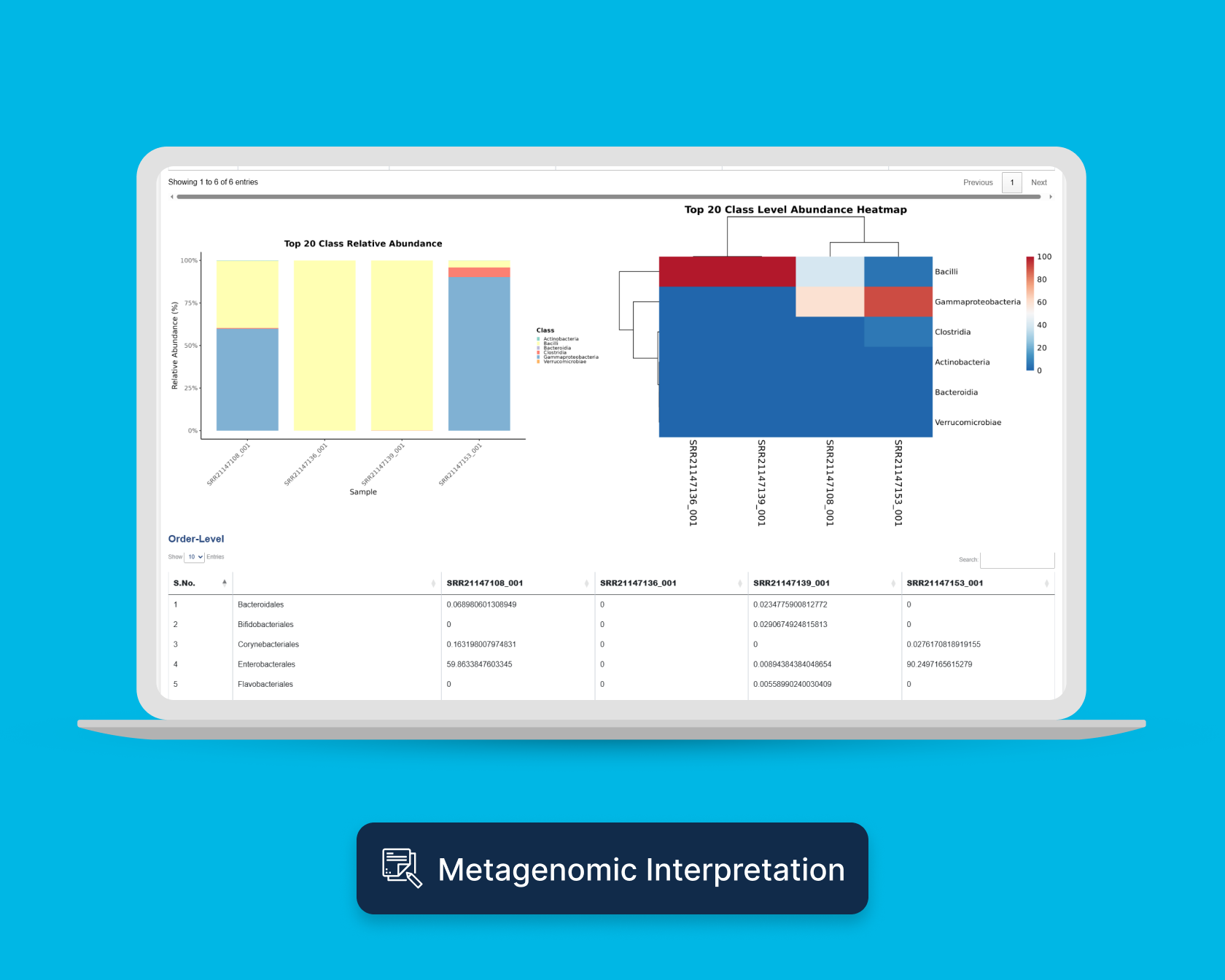
Taxonomic classification names every organism. Abundance profiling counts them. Binning rebuilds their genomes. Functional annotation maps what each one is metabolically capable of.

  • Identifies statistically significant, differentially expressed genes.

  • Evaluates biological variance using PCA plots and heatmaps.

  • Maps genes to functional biological and KEGG pathways.

MG-Post Proccessing-1
See your data. Get the story.

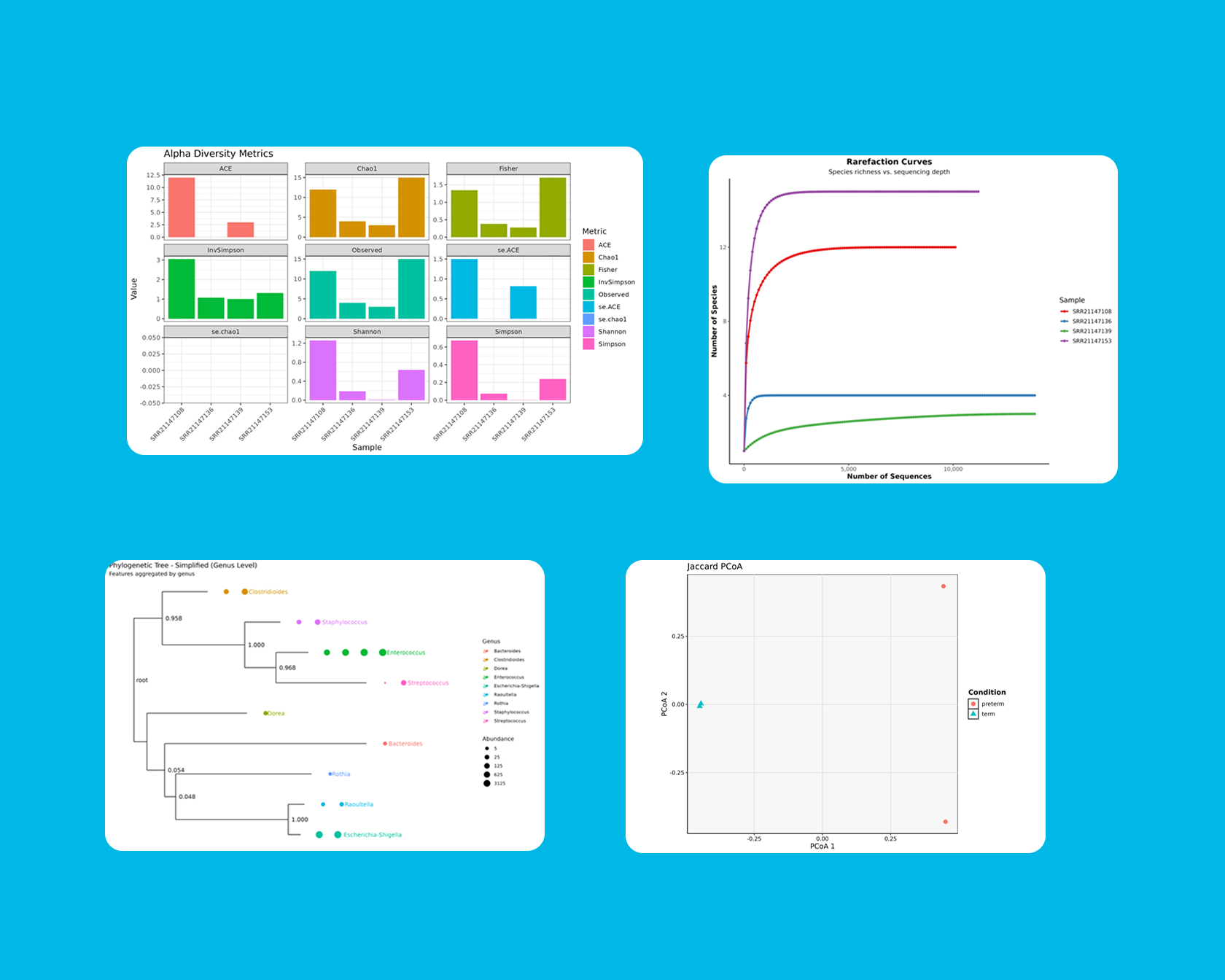
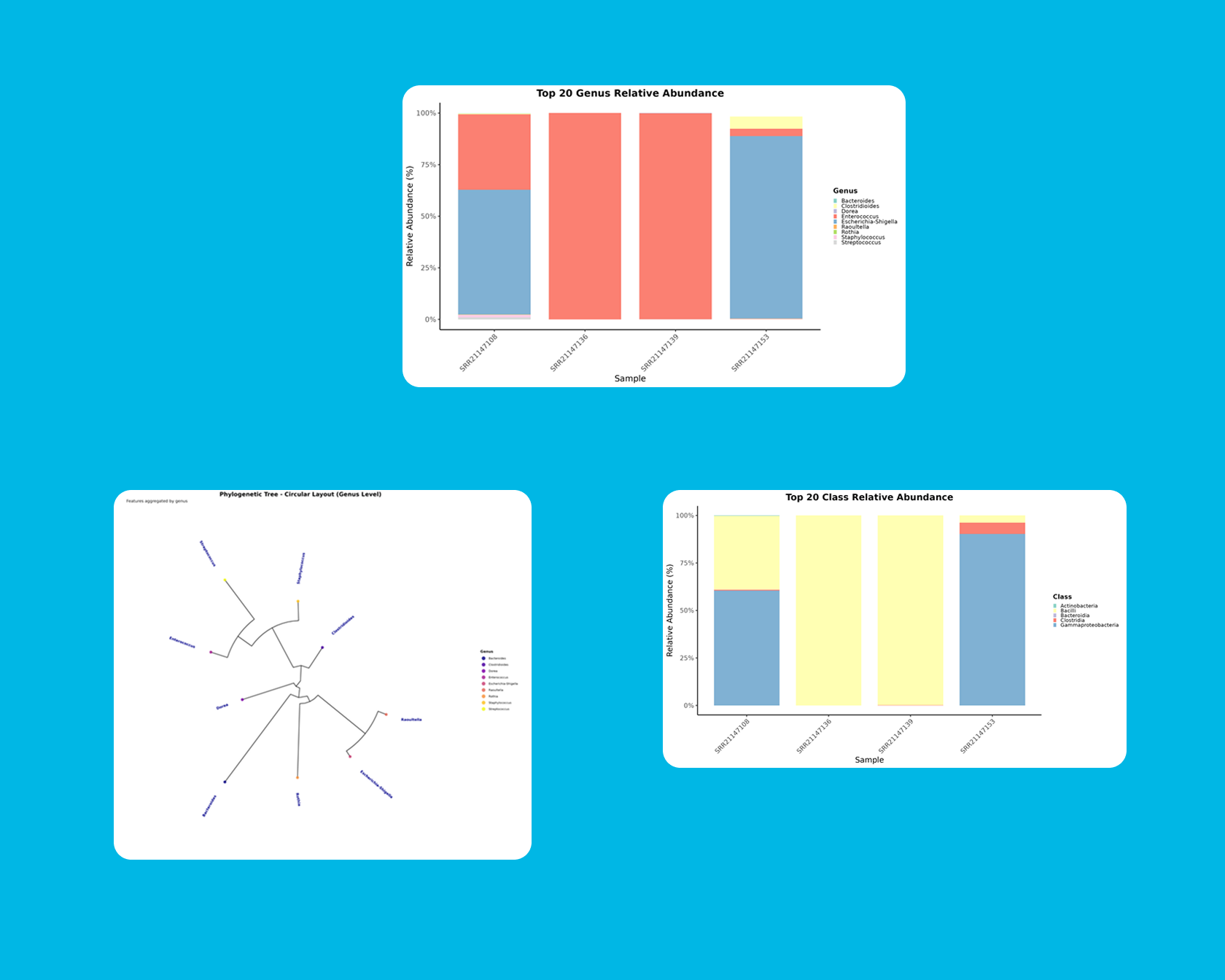
Diversity reports, abundance profiles, MAG quality assessments and functional pathway maps all as interactive HTML reports delivered straight to your dashboard.

  • Delivers clear visual reports for primary and downstream analysis.

  • Generates high-resolution, interactive figures for quick reviews.

  • Streams results to your dashboard as soon as the run finishes.

MG-Reports-1

From results to publication ready.

From raw FASTQ files to reconstructed genomes and pathway maps every deliverable you need to publish or present is in your dashboard the moment the run finishes.

  • Achieve unmatched accuracy by automating IC reconciliation.
  • Gain full transparency through real-time status monitoring.
  • Ensure seamless integration with secure, flexible solutions.
MG-Deliverables-1
Our Pipeline Modules

Everything Runs. You Just Watch.

Who's inside

Every organism classified to species level. Relative abundance quantified for bacteria, archaea, fungi and viruses in one run.

Rebuild genomes

Contigs binned by organism. Near-complete genomes assembled including species no lab has ever cultured before.

What they do

Genes, proteins and metabolic pathways annotated across the whole community. Know the functional potential of every organism.

10K+

Samples analyzed

99%

Pipeline accuracy

<24h

Turnaround time

200+

Research teams

Customer stories

Over 6,000 happy customers worldwide

View all

No case studies found. Select a blog source stream in the module editor panel.

Got Questions?

We figured you'd ask

Got Questions-5

What exactly is metagenomics and how is it different from regular genomics?

Regular genomics studies one organism at a time. Metagenomics sequences everything in a sample at once including bacteria, viruses, fungi and archaea without culturing them. One run gives you the full picture of an entire microbial ecosystem.

What is a MAG and why does it matter?

A Metagenome-Assembled Genome is a near-complete genome rebuilt from a complex microbial mixture without isolating the organism. Binning groups reads by organism and reconstructs the genome. This lets you study species no one has ever grown in a lab including entirely new ones your sample might contain.

What is the difference between 16S sequencing and shotgun metagenomics?

16S targets a single marker gene fast and cheap but only identifies bacteria and misses viruses, fungi and archaea entirely. Shotgun metagenomics sequences everything across all kingdoms plus functional genes and metabolic pathways. GenomeBeans uses shotgun for the complete picture.

What does the metagenomics report actually include?

Three interactive reports a taxonomic diversity report with abundance profiles and phylogenetic trees, a MAG quality summary with completeness and contamination scores, and a functional pathway report with KEGG, COG and GO annotations. All shareable HTML delivered to your dashboard.

How long does a metagenomics run take?

Most runs complete within a few hours depending on dataset size. GenomeBeans processes everything in parallel from QC to annotation so you don’t wait for step-by-step outputs. You get the full interactive report the moment analysis finishes.

Is my sequencing data safe and private?

100% private. You own everything you upload. Never shared. Never sold. Results archived for 90 days then permanently deleted. No exceptions. No fine print.

Get Started

Ready to turn your raw sequencing data
into publication-ready results?